
Google Ads vs. Facebook Ads: Which Platform Delivers Better ROI in 2026?
A full-funnel paid advertising breakdown: Google Search Ads for high-intent leads vs. Meta Ads for brand awareness. Budget splits, ROI benchmarks, and when to use each.
Paid Advertising • PPC Strategy • ROI
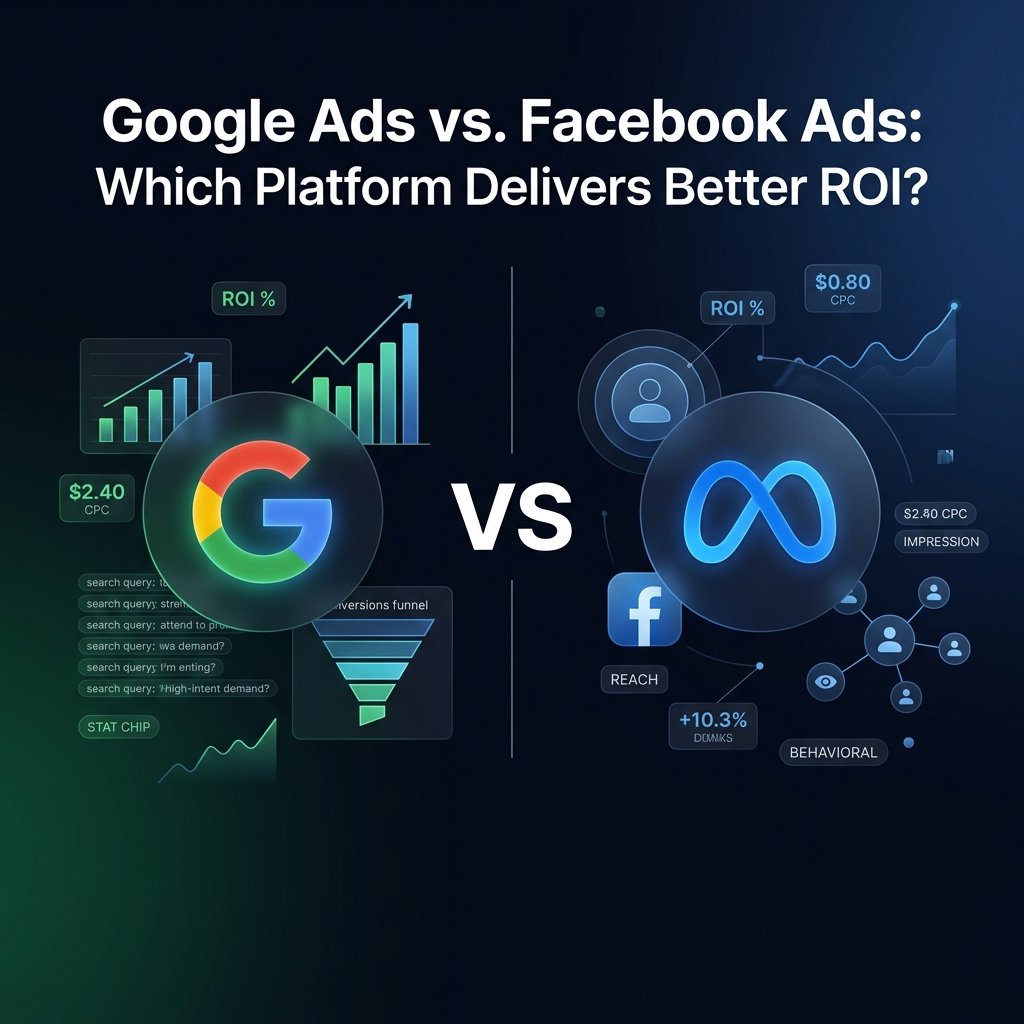
Google Ads vs Facebook Ads — it’s the most debated question in paid advertising strategy for small businesses. The answer isn’t which platform is better. It’s understanding what each platform is designed to do — and using them together to build a full-funnel paid advertising strategy that drives consistent ROI.
Platform DNA: What Each Was Built For
Before comparing cost-per-click or ROAS, you need to understand the fundamental purpose of each platform — because they target completely different moments in your customer’s journey.
Google Ads
Demand Capture
Google intercepts buyers who are already searching for what you sell. When someone types “business consultant near me” — they’re ready. Google puts you in front of them at the exact moment of intent.
Avg. CPC: $2–$15 • Best ROI: Service businesses
Meta Ads
Demand Generation
Meta reaches people who don’t know they need you yet. Through behavioral targeting, lookalike audiences, and visual storytelling, it creates desire — building brand awareness and warming cold audiences at scale.
Avg. CPC: $0.50–$3 • Best ROI: E-commerce, awareness
Where Each Platform Lives in Your Funnel
The real power comes from using both platforms together — each at the right stage of your paid advertising funnel.
Top of Funnel — Awareness
Facebook & Instagram Ads
Reach cold audiences with video & image campaigns. Build brand recognition and create desire before they even search.
Mid Funnel — Consideration
Facebook Retargeting + Google Display
Re-engage warm audiences who visited your site. Serve educational content, testimonials, and build unbreakable trust.
Bottom of Funnel — Conversion
Google Search Ads
Capture ready-to-buy traffic actively searching for your service. Drive phone calls, form fills, and direct purchases.

Google Ads: Capturing Existing Demand
Google Search Ads target users actively looking for solutions right now. Perfect for urgent services, high-intent buyers, and businesses ready to convert traffic immediately.

Meta Ads: Generating New Demand
Facebook & Instagram Ads build awareness and influence buying decisions — even before users realize they need your product. Ideal for visual brands and e-commerce.
The Retargeting Power Play
Best practice: Capture search intent on Google → retarget on Instagram & Facebook to close the sale. A full-funnel strategy consistently delivers the highest paid advertising ROI.
How to Allocate Your Paid Advertising Budget
For most small businesses running a Google Ads and Facebook Ads strategy together, here’s a proven starting split based on your primary goal:
Goal: Fast Leads
Heavy Google for high-intent conversions. Meta for retargeting only.
Goal: Balanced Growth
Full-funnel approach. Best long-term ROI for most service businesses.
Goal: Brand Awareness
Meta-heavy for visual storytelling, reach, and audience building at scale.
Related Reading
Ready to Run Ads That Actually Convert?
A successful paid advertising strategy goes beyond just running ads — it requires engineering full-funnel campaigns that turn ad spend into measurable revenue.
Get a Free Strategy Review →No long-term contracts • Results-focused
Q & A
Most Asked Questions About Paid Strategy
Everything you need to know about budgets, timelines, and choosing the right platform.
Should I use Google Ads or Facebook Ads for my small business?
If you need leads fast from people already searching, start with Google Ads. If you’re building a brand, have a visual product, or want to reach a cold audience at scale — start with Meta. For sustained growth, use both in a coordinated funnel strategy.
What is a good budget to start Google Ads?
For most local service businesses, $500–$1,500/month is a realistic starting budget for Google Search Ads. Below that, it’s difficult to generate enough data to optimize. The key is tight keyword targeting and a high-converting landing page.
Which platform has better ROI — Google or Facebook Ads?
Neither — it depends entirely on your industry, offer, and funnel setup. Google typically delivers faster ROI for high-intent services. Facebook delivers better ROI for e-commerce and visual brands with strong creative. Combined strategies consistently outperform single-platform approaches.
How long does it take for Google Ads to work?
Most campaigns see initial lead data within 2–4 weeks. Meaningful optimization takes 60–90 days as Google’s algorithm gathers conversion data. Patience + data = better results. Cutting campaigns before 90 days is one of the most common mistakes small businesses make.
Do I need a special landing page for paid ads?
Yes — sending paid traffic to your homepage is one of the fastest ways to waste your ad budget. A dedicated, conversion-optimized landing page with a clear headline, social proof, and a single CTA can double or triple your conversion rate from the same ad spend.
“A great product is born at the intersection of design, usability, and empathy.”
Every decision we make as developers shapes how people experience technology.